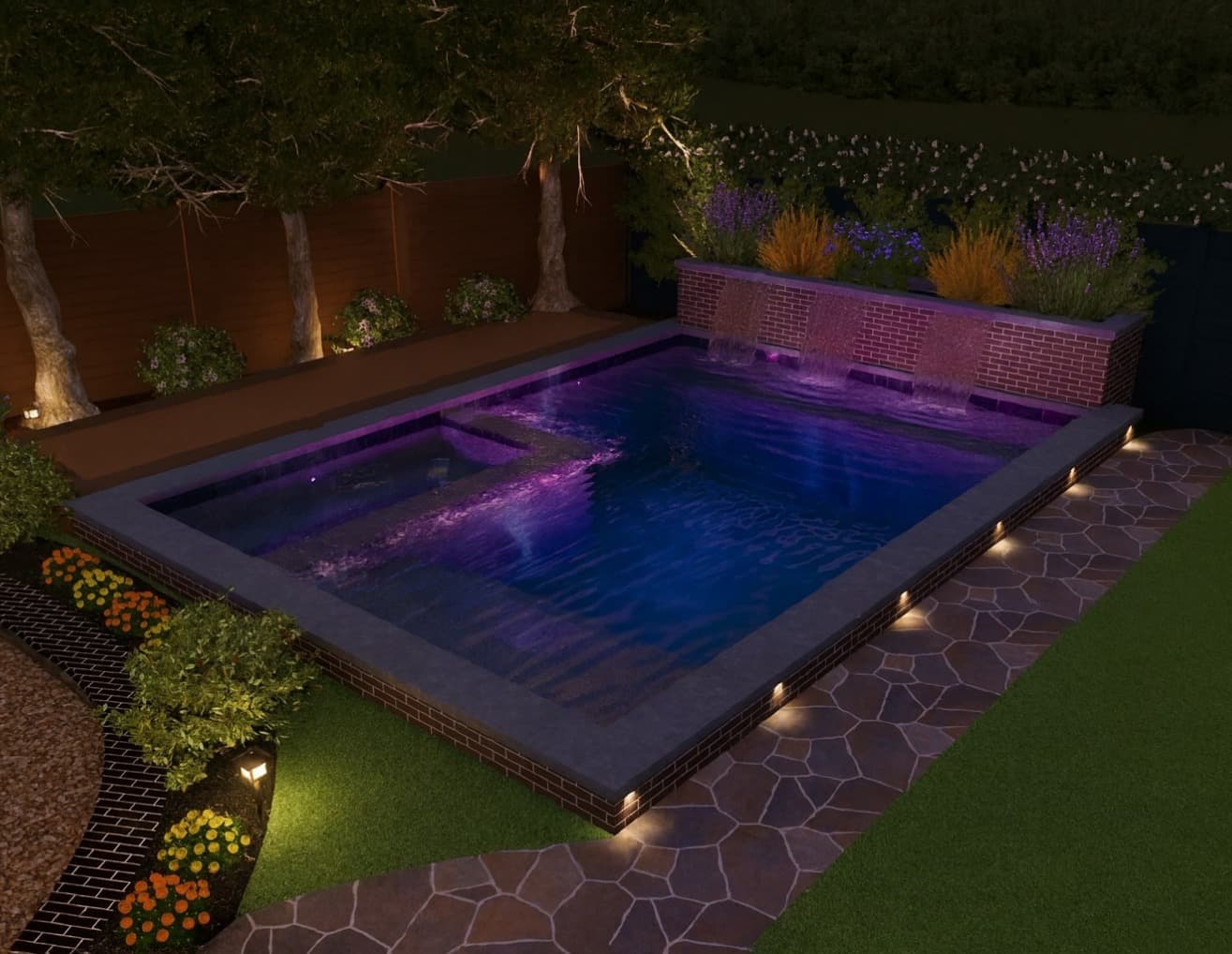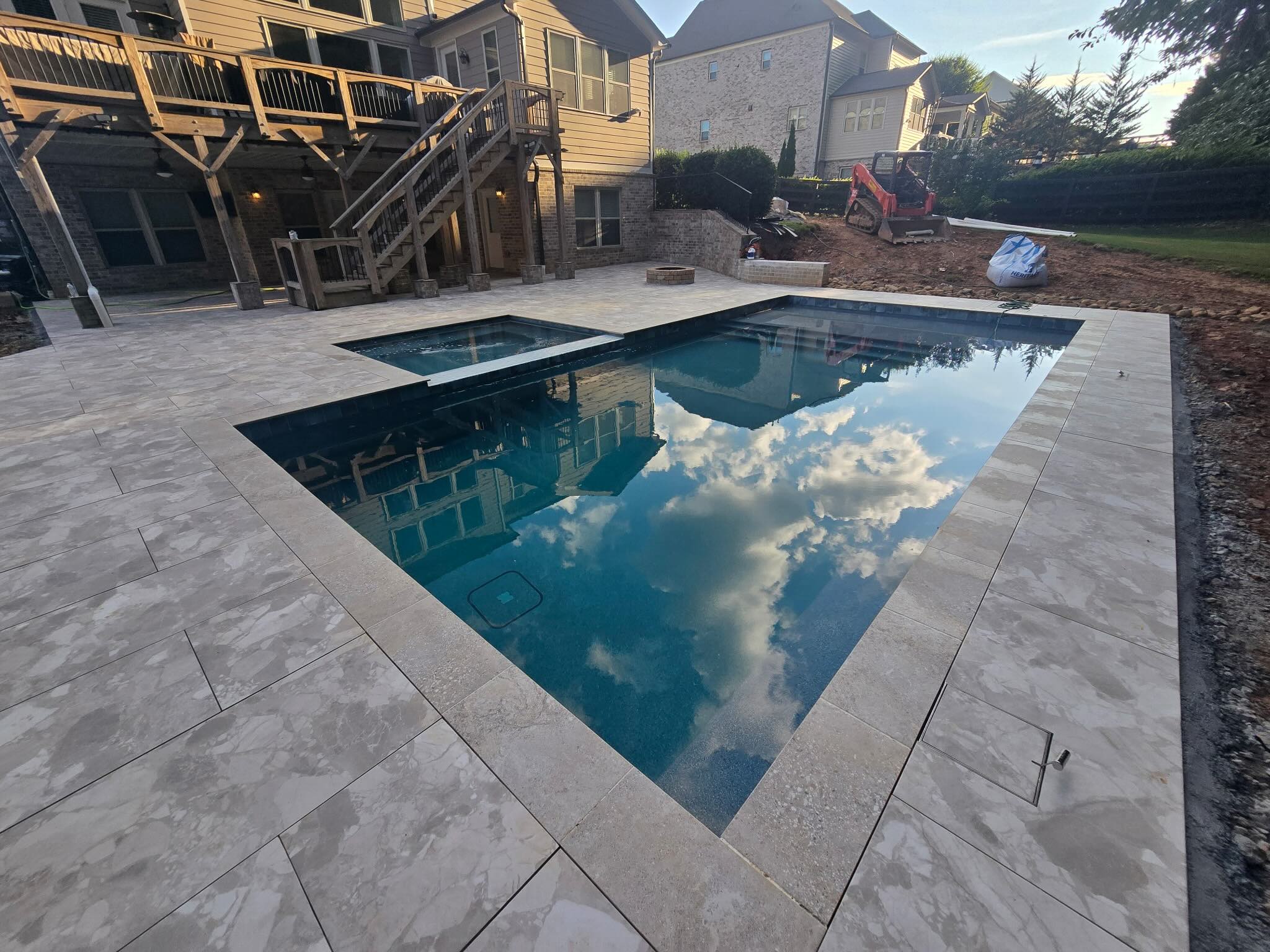
A residential pool is a major property project, not just a choice of shape and finish. In Metro Atlanta, a well-planned build starts with the property address, the local permit authority, site conditions, and a clear scope for the pool and the outdoor spaces around it. That early diligence helps homeowners ask better questions when evaluating custom pools in Atlanta, comparing a pool builder in Marietta, GA, or planning a broader backyard renovation.
This guide is for homeowners—not commercial or HOA facilities. It provides a practical starting point and links to official references. Local code officials determine which permits, plans, inspections, and amendments apply to a specific parcel, so confirm the current requirements before construction begins.
1. Start With the Property Jurisdiction
“Metro Atlanta” is not one permitting jurisdiction. The authority for a home in Atlanta city limits may differ from the authority for a home in Marietta, Milton, Sandy Springs, or unincorporated Cobb County. Verify the parcel’s actual jurisdiction before you base a design or schedule on a neighbor’s experience.
The City of Atlanta’s current guidance treats a swimming-pool permit as a separate application from permits for related work such as a pool house or retaining wall. In Cobb County, residential pool applications are handled through Community Development, and a pool-and-barrier application is part of the county’s process. Properties using septic systems may also need review from the appropriate health authority. Start with the City of Atlanta Office of Buildings or Cobb County Community Development, then confirm the right office for your address.
Homeowners should also check for subdivision or HOA design-review requirements. Private approvals do not replace permits, and a permit does not automatically satisfy private covenants.
2. Use the Current Georgia Pool-Code Reference
Georgia’s Department of Community Affairs identifies the 2024 International Swimming Pool and Spa Code, used with Georgia State Amendments, as the state minimum standard pool-and-spa code. The current amendment packet is revised effective January 1, 2026. Among its provisions, the amendments address permanent barriers and safety covers for pools and spas. Review the official Georgia 2026 ISPSC amendment packet and ask the local building department which requirements apply to the design you are considering.
Do not rely on a social post, an old project, or a generic checklist as a substitute for plan review. Barrier placement, gates, electrical work, equipment, drainage, and inspections should be addressed in the approved project documents before the pool is filled or put into operation.
3. Understand the Yard Before You Set the Pool Layout
A survey and a site walk help identify questions that are easy to miss in an inspiration photo. Review property lines, easements, utilities, slopes, drainage paths, tree roots, access for equipment, and any existing patio or deck. If the home has a septic system, locate the system and confirm the required review before finalizing the layout.
North Georgia properties can have significant grade changes and clay soils. Those conditions do not rule out a pool, but they can affect excavation, access, retaining, drainage, engineering, and the overall construction sequence. A qualified design and construction team should explain which conditions are confirmed, which require additional investigation, and how those unknowns are represented in the proposal.
4. Design the Pool and Outdoor Living Space Together
Think about how people will move between the house, pool entry, seating, shade, and gathering areas. A sun shelf or spa may influence circulation and equipment; decking and stairs affect access; lighting and planting shape the evening experience. Considering these elements together can make a backyard transformation feel intentional rather than like a pool dropped into an existing yard.
Use a pool design consultation to sort must-haves from later-phase ideas. Bring photos, survey information, and a realistic budget range. Ask what the pool design services in Atlanta include—concepts, revisions, construction documents, selections, engineering coordination, and permit support can be separate parts of the process.
Whether you are considering a luxury pool builder in Georgia or a more modest project, the proposal should explain how the pool connects with the outdoor living space: patio, retaining features, fencing, landscape, lighting, and any outdoor kitchen or fire feature. For an outdoor installation in Atlanta or Sandy Springs, identify which trades and features are included in the pool contract and which are coordinated separately.
5. Compare Builders on Scope, Not Just the Bottom Line
For custom pool construction in Atlanta or pool construction in Marietta, GA, request proposals with comparable assumptions. Each proposal should identify the pool structure and finish, equipment, decking, site preparation, permitting and inspection responsibilities, allowances, exclusions, cleanup, startup, warranty terms, and how unexpected site conditions will be handled.
- Ask who manages design coordination, permit submissions, inspections, and schedule updates.
- Clarify whether excavation, rock or unsuitable-soil removal, retaining, drainage, fencing, and landscaping are included.
- Request a written payment schedule, change-order process, and project-specific timeline assumptions.
- Check references for projects with similar site conditions and scope.
- Verify applicable professional credentials through the Georgia Secretary of State license verification portal, and ask for proof of insurance and relevant project experience.
A strong pool builder should be willing to explain what is included, what remains to be confirmed, and who is responsible for each step. If an outdoor living contractor in Atlanta or another specialist is involved, put coordination and scope boundaries in writing to reduce gaps between proposals.
6. Plan With the Permit and Inspection Sequence in Mind
Permit review and required inspections are project milestones—not paperwork to handle after construction. Ask the local authority which documents are needed, whether separate trade permits apply, what must be inspected before it is covered, and what approvals are required before the pool can be filled or used. Leave room in the schedule for design revisions, plan review, inspections, weather, and material availability.
For homeowners researching pool design services in Atlanta or a pool builder in Marietta, GA, the best next step is often a site-specific conversation, not a generic completion-date promise. A realistic proposal connects the design, permitting path, site conditions, and construction phases.
A Local Plan Makes for a Better Pool Project
Start by confirming the jurisdiction, reviewing the current Georgia code reference, documenting site conditions, and writing down how you want the finished yard to work. Then compare builders on a consistent scope. Those steps give homeowners a stronger foundation for a residential pool project anywhere from Atlanta and Marietta to Milton and Sandy Springs.
White Glove Construction designs and builds custom pools and outdoor living spaces across Metro Atlanta. Explore our residential project portfolio or schedule a pool design consultation to discuss your property and priorities.